|
|
Il Comando della Türk Deniz Hava Komutanlığı ci ha autorizzato a visitare la base aeronavale di Kocaeli (Izmit), sicuramente la struttura più importante dell’Aviazione Navale turca.
La base aeronavale è collocata presso Izmit, distante 120 km da Istanbul, dà il nome all’omonimo Golfo posto ad est del Mar di Marmara.
La base è intitolata a “Cengiz Topel”. Il Capitano Cengiz Topel era un pilota da caccia della Türk Hava Kuvvetleri che ha perso la vita durante la battaglia di Tillyria (1964), diventando la prima vittima di guerra della Forza Aerea turca a Cipro.
La base aeronavale ha un valore storico e strategico di primaria importanza per la Türk Deniz Hava Komutanlığı, storico perché è la struttura dove è nata la componente aerea della Marina turca; strategica perché è posta nelle vicinanze dello stretto dei Dardanelli. Lo stretto, con una larghezza di 60 km, collega il Mar Nero con il Mar di Marmara. Il passaggio delle navi è regolato da trattati internazionali che rendono necessari continui controlli dal cielo.
La base aerea è sede del Topel Deniz Hava Ana Üs Komutanlığı, che a sua volta è suddiviso nei seguenti reparti:
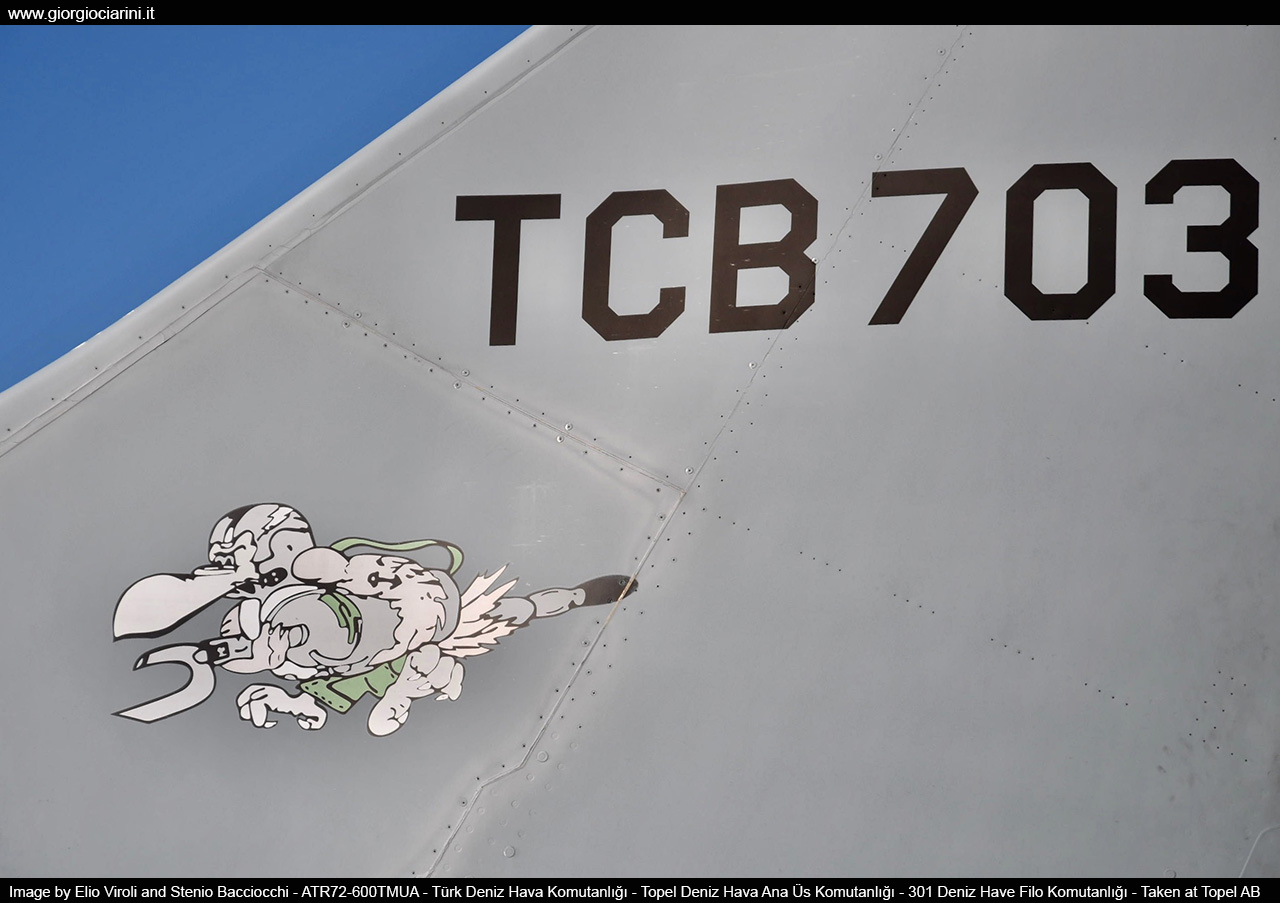
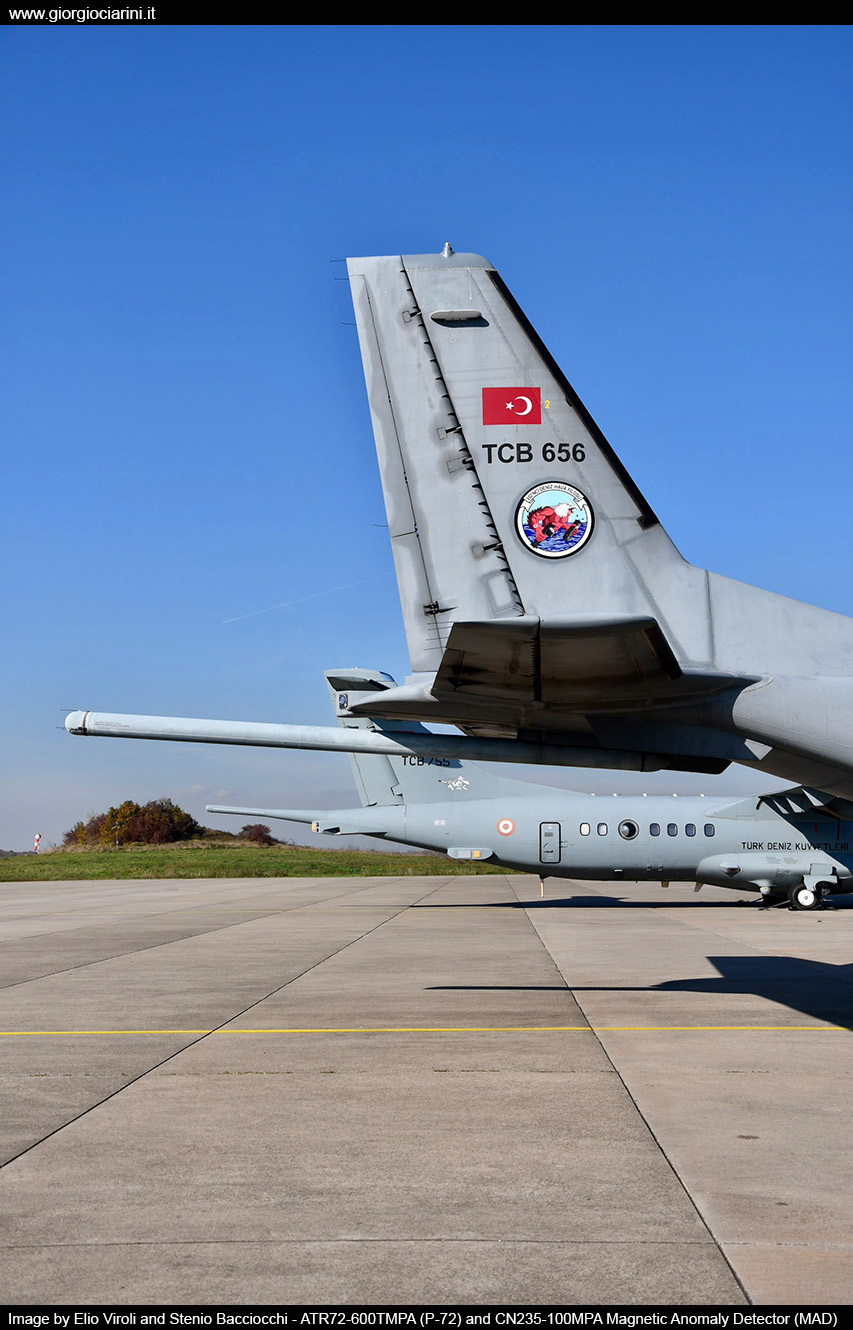
301 Deniz Have Filo Komutanlığı - Marti (Gabbiano) e dotato di: ATR72-600TMUA – ATR72-600TMPA (P-72) – CN235-100MPA – TB-20.
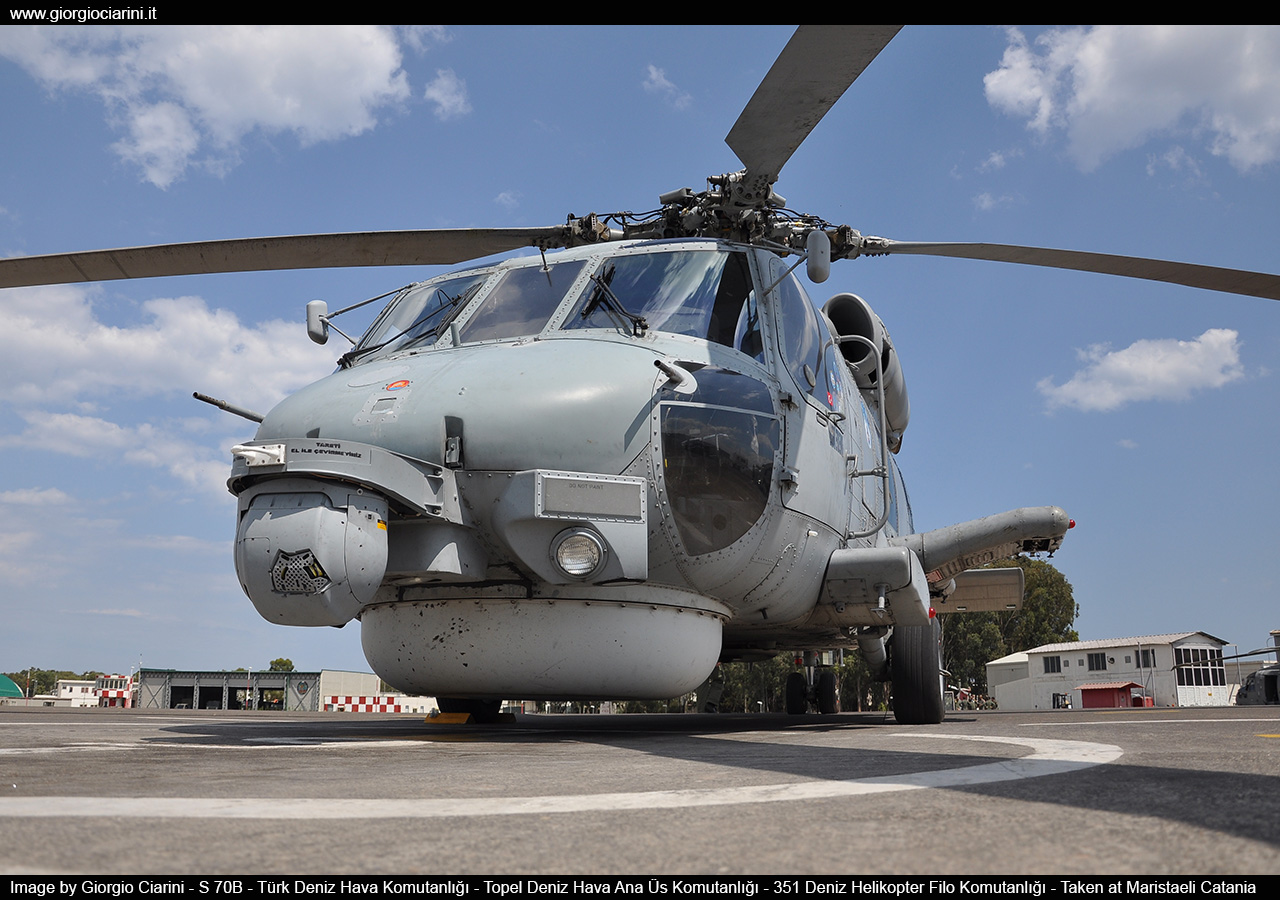
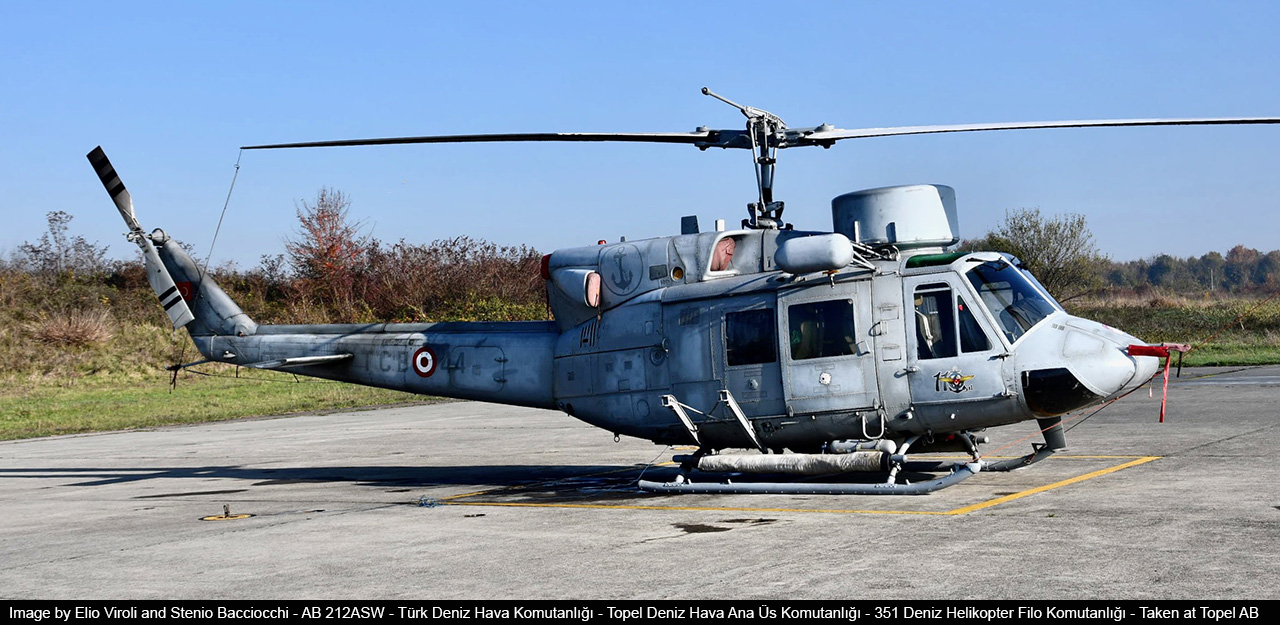
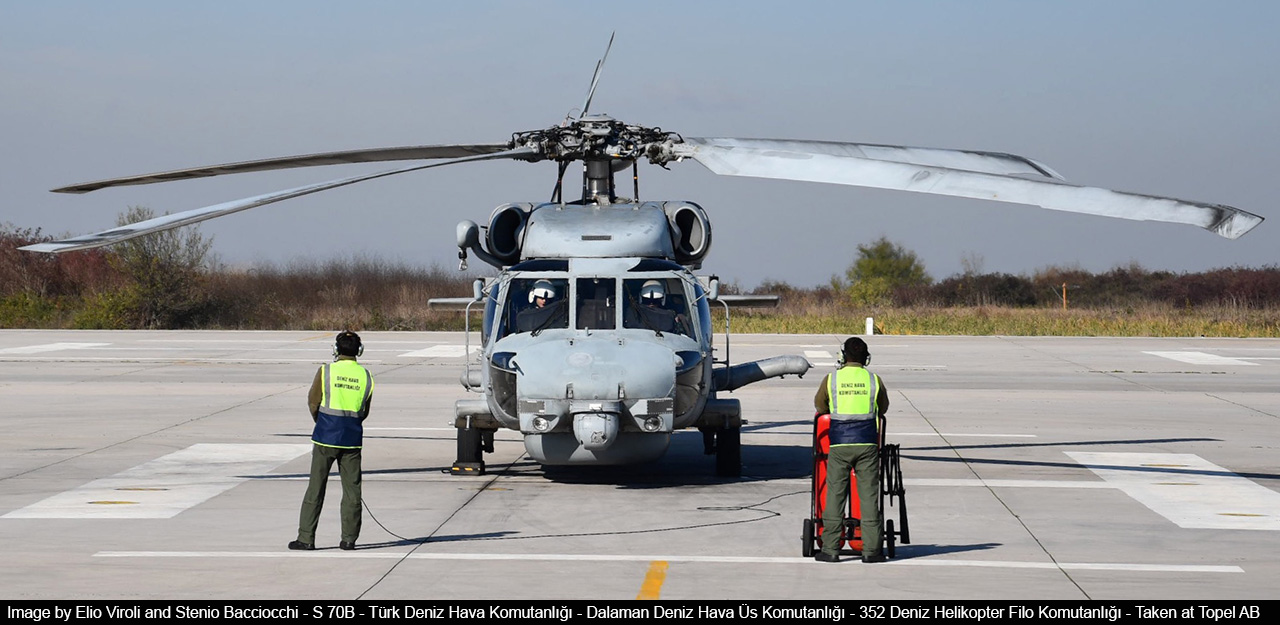
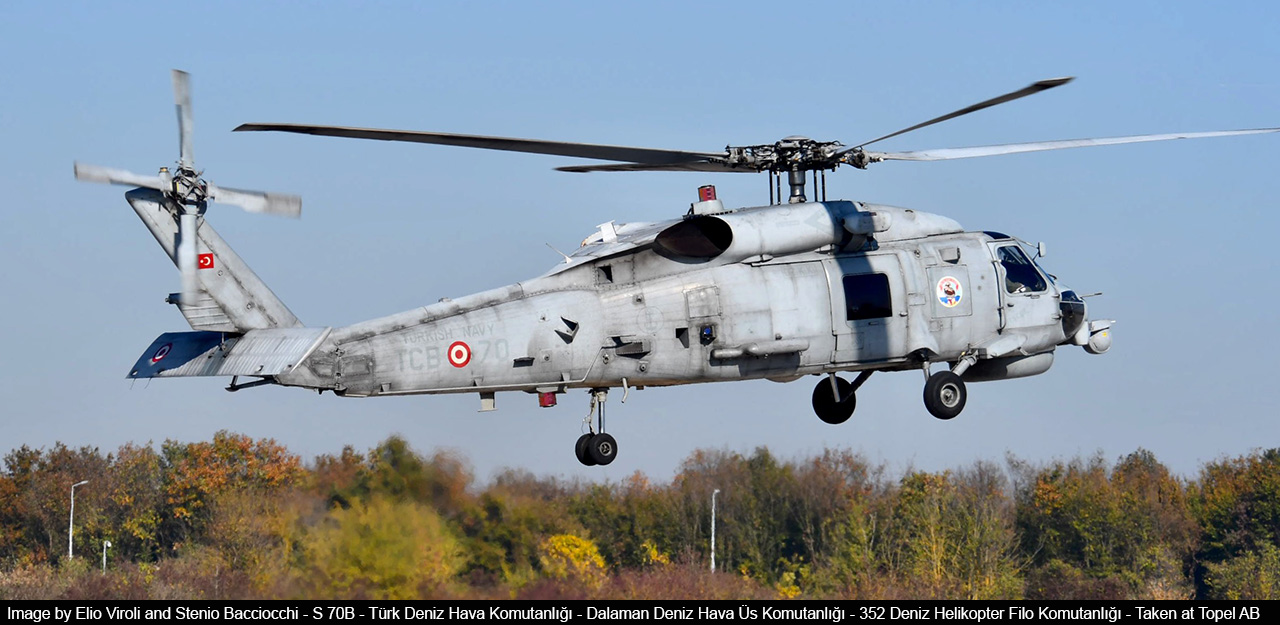
351 Deniz Helikopter Filo Komutanlığı - Yengeç (Granchio) e dotato di: AB212ASW – AB212EW – S-70B.
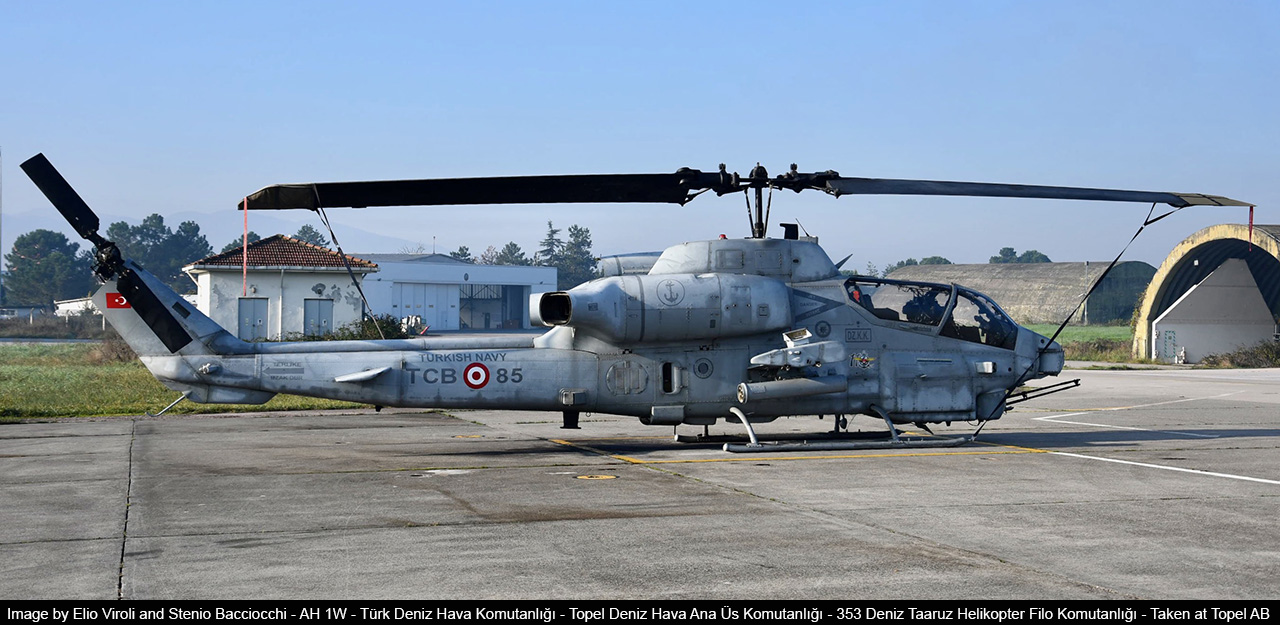
353 Deniz Taaruz Helikopter Filo Komutanlığı e dotato di: AW-1W.
Deniz Hava Eğitim Merkezi Komutanlığı e dotato di aeromobili vari.
Il compito principale dell’Aviazione Navale è tutelare la “Patria Blu”, sull’Egeo, il Mar Nero e il Mediterraneo, nonché proteggere il traffico marittimo internazionale in navigazione in queste acque.
Gli albori del Servizio Aereo navale si identificano nel Deniz Tayyare Mektebi (Ottoman Navy Flying Service) la prima unità di aviazione navale creata nel 1914 a Yeşilköy. Unità dotata di idrovolanti Curtiss Model F che ha prestato servizio fino al crollo dell’Impero Ottomano nel 1918. Le operazioni svolte erano prevalentemente di ricognizione in particolare durante la campagna dei Dardanelli.
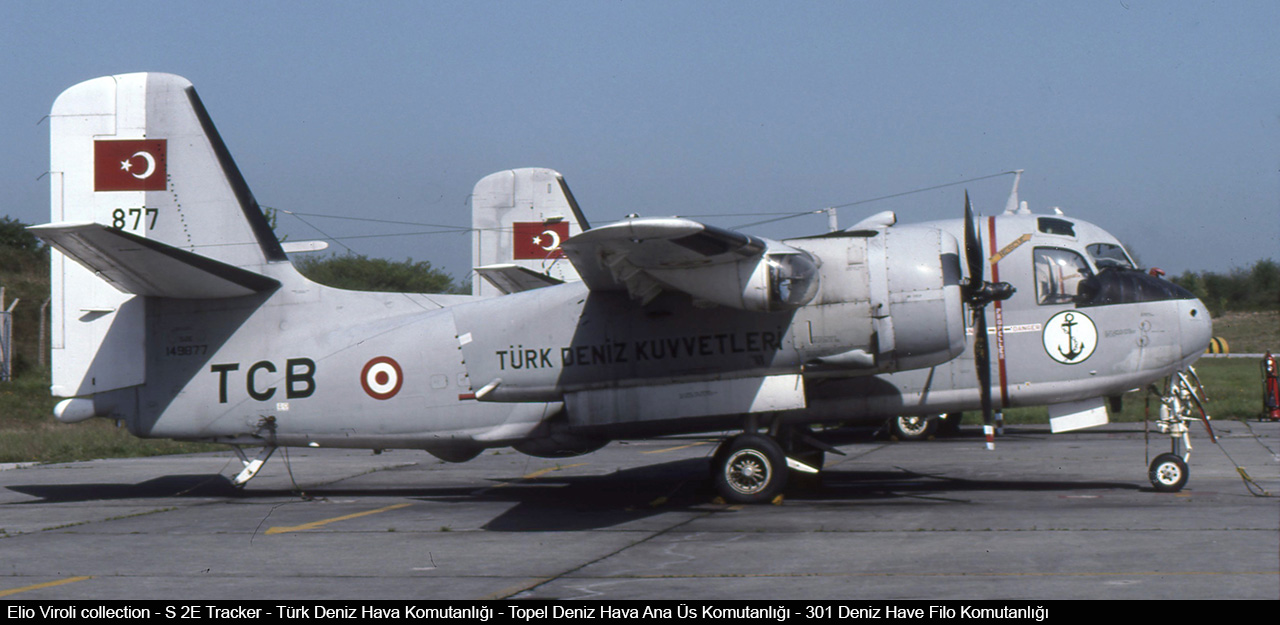
Un primo tentativo di far rinascere la Componente Aerea della Marina turca avviene con la consegna nel 1968 di otto Grumman S 2A Tracker, come surplus della Marine Luchtvaartdienst (MLD – Reale Aviazione Navale dei Paesi Bassi), affiancati successivamente da 12 S 2E ex United States Navy. Tutti i Tracker erano stati assegnati al 301 Deniz Have Filo Komutanlığı ma operati da equipaggi misti della Marina e della Forza Aerea.
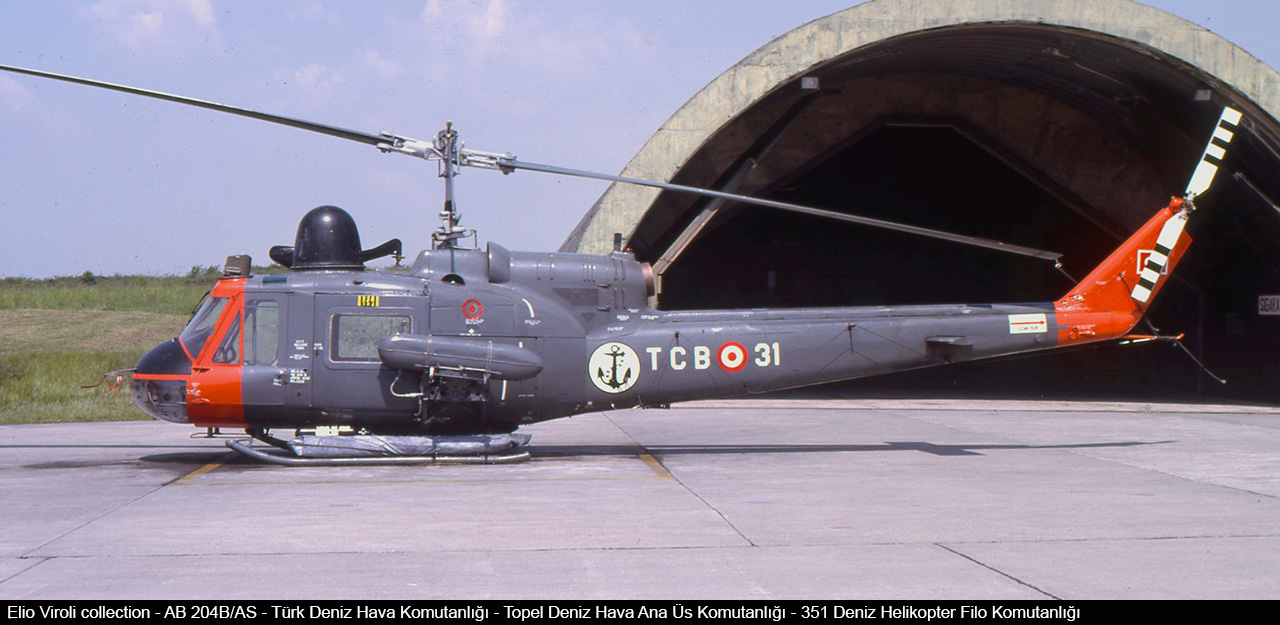
La rinascita vera e propria dell’Aviazione Navale turca avviene nel 1971 con l’acquisizione di elicotteri di produzione italiana (AgustaBell), prima con l’AB 204B/AS e poi con l’AB 212ASW, i primi AB 204B/AS erano stati assegnati al Deniz Helikopter Filo Komutanlığı sulla base aerea di Ankara Güvercinlik del Türk Kara Havacılık Komutanlığı (Esercito turco). Il personale dell’Esercito turco ha da sempre garantito l’addestramento degli equipaggi di volo e dei tecnici dell’Aviazione Navale nella propria struttura di Ankara Güvercinlik, ed è ancora oggi è il centro addestrativo di riferimento.
Con il ritiro dei Tracker agli inizi degli anni ’90 per l’Aviazione Navale inizia un periodo difficile, in un primo momento i piloti volano con gli SF 260D della Forza Aerea per mantenere i brevetti, mentre nel 1995 vengono consegnati sette Socata TB 20 che ancora oggi prestano servizio nel 301 Deniz Have Filo Komutanlığı a supporto delle attività addestrative degli equipaggi di volo che operano con gli ATR 72 e i CN235.
|
 |
 |
 |
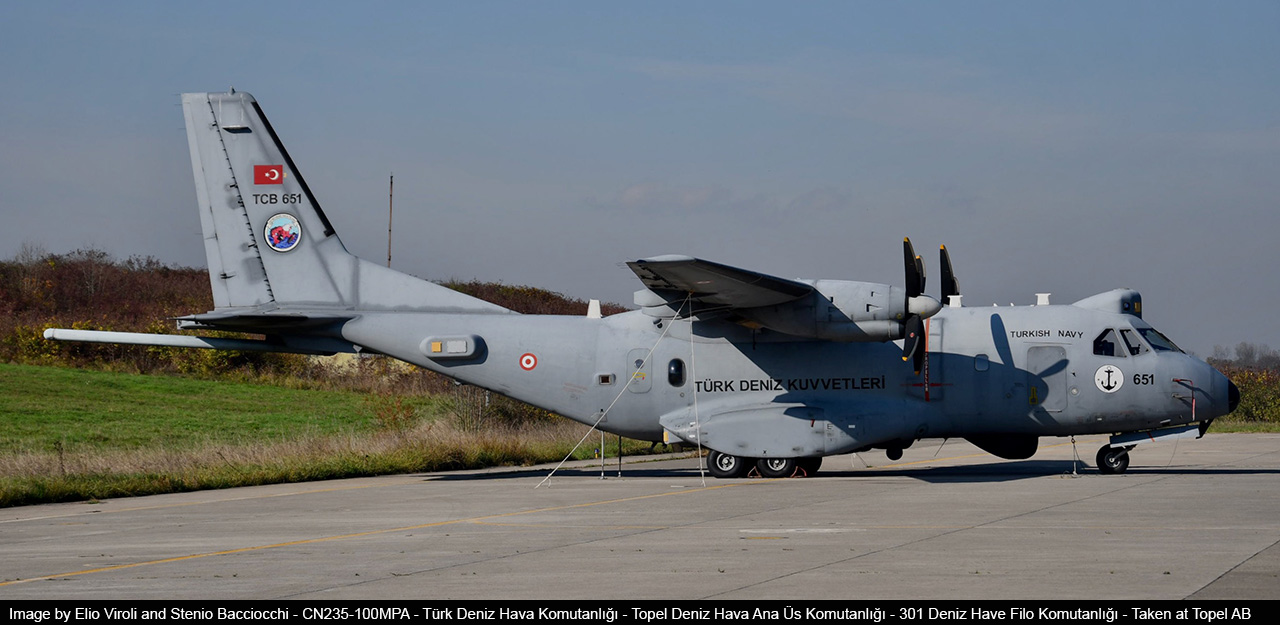
Per l’ala fissa la rinascita avviene con il programma MELTEM II “vento fresco estivo dal mare” che vede l’acquisizione di sei CASA CN235-100MPA con vere capacità di effettuare missioni di pattugliamento marittimo (MPA – Maritime Patrol Aircraft) e lotta antisommergibile/navale (ASW/ASuW – Anti-Submarine Warfare / Anti-Surface Warfare). Per l’immissione in servizio dei pattugliatori della CASA l’Aviazione Navale turca ha potuto usufruire del supporto fornito dall’Aéronautique Navale francese che sui suoi Atlantic 2 utilizza lo stesso sistema di missione, il Thales AMASCOS-300 (Airborne Maritime Situation Control System).
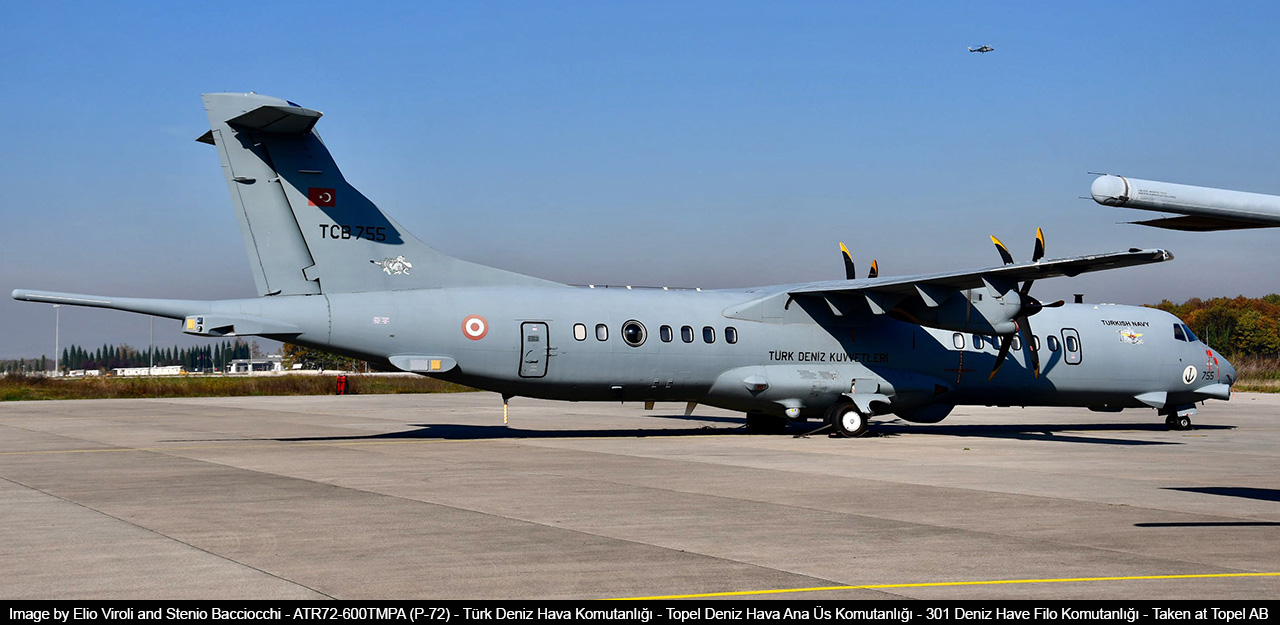
Con l’arrivo dei primi sei ATR 72 prodotti dall’italiana Alenia Aermacchi (Ora Leonardo) si attua il piano MELTEM III, anche il biturbina italo/francese è dotato dell’AMASCOS-300 più altri sottosistemi tra cui: Electronic Support Measure (ESM), Magnetic Anomaly Detector (MAD), boe sonore, dispenser per chaff and flares, sistema di allarme per ingaggio da radar / missili / laser. In aggiunta l’ATR è dotato di piloni su ciascun lato della fusoliera per il trasporto di siluri o missili aria-mare. Grazie alle sue apparecchiature di comunicazione, di nuova generazione, il velivolo può condividere dati in tempo reale con i sistemi di comando e controllo a terra o di altre piattaforme. |
 |
 |
 |
 |
La componente ad ala rotante è stata aggiornata con l’arrivo del Sikorsky S 70B SeaHawk, un progetto lanciato negli anni ’90 per soddisfare la richiesta dell’Aviazione Navale turca per un elicottero di nuova generazione con capacità ASW/ASuW. Nel 1997 è stata firmata una prima commessa per quattro elicotteri, a cui se ne sono aggiunti nel 1998 altri otto, di questi un’esemplare è stato perso nel dicembre del 2002, in totale gli elicotteri consegnati sono stati 25.
Con l’introduzione dell’S 70 è stato creato anche un Naval Air Training Center dotato di simulatore. La componente ad ala rotante è sempre stata ampiamente impegnata in vari teatri, partendo dalla crisi di Cipro, successivamente nelle operazioni internazionali dei Balcani (Jugoslavia) e del Corno d’Africa (Somalia) a bordo delle Fregate classe Yavuz e Barbaros, e ancora in scenari operativi come in Libia e in Libano. |
 |
 |
 |
|
La novità in assoluto della nostra visita presso la base aerea Cengiz Topel è stata di poter fotografare i “nuovi” AH 1W Super Cobra. Gli elicotteri non sono di nuova costruzione ma sono stati trasferiti dal Türk Kara Havacılık Komutanlığı (Esercito turco) al 353 Deniz Taaruz Helikopter Filo Komutanlığı, nuovo Reparto creato appositamente per ricevere i Super Cobra. I primi quattro elicotteri sono stati consegnati al 353 Filo nel febbraio del 2022, nei successivi mesi sono stati consegnati i restanti sei per un totale di 10 AH 1W. La Marina turca prevede di utilizzarli a bordo della nuova nave d’assalto anfibia TCG ANADOLU L-400. |
 |
 |
I compiti principali assolti quotidianamente dall’Aviazione Navale sono il pattugliamento marittimo, la lotta antisommergibile, la lotta antinave, la ricerca e soccorso (SAR – Search and Rescue), il controllo dell’immigrazione clandestina, la ricognizione, e per finire negli ultimi anni, in pratica da quando è iniziato il conflitto tra Federazione russa e Ucraina il rilevamento di mine navali che, posizionate in Crimea, si sono staccate dagli ancoraggi e le correnti le hanno trasportate al largo verso le coste della Romania, Bulgaria e ovviamente della Turchia.
Grazie ad un pattugliamento svolto con i CN235MPA e gli ATR 72 e l’utilizzo dei loro sistemi di missione vengono rilevate e intercettate dalla Marina che tramite le navi vengono recuperate e disattivate. |
|
Gli autori desiderano ringraziare il: Ministero degli Esteri della Repubblica di Turchia, l’Ufficio Difesa Ambasciata d’Italia ad Ankara, il Capitano di Fregata Kutlu Can Akcanozan e il Capitano di Fregata Melih Davran.
Foto di Elio Viroli, Stenio Bacciocchi e Giorgio Ciarini
Testo di Elio Viroli e Stenio Bacciocchi
Novembre 2025
|
|
English translation
The Türk Deniz Hava Komutanlığı (Turkish Naval Air Command) authorised us to visit the Kocaeli (Izmit) naval air base, undoubtedly the most important facility of the Turkish Naval Aviation.
The naval air base is located in Izmit, 120 km from Istanbul, and gives its name to the gulf of the same name located east of the Sea of Marmara.
The base is named after “Cengiz Topel”. Captain Cengiz Topel was a fighter pilot in the Türk Hava Kuvvetleri (Turkish Air Force) who lost his life during the Battle of Tillyria (1964), becoming the first war casualty of the Turkish Air Force in Cyprus.
The naval air base has historical and strategic importance for the Türk Deniz Hava Komutanlığı. It is historical because it is the place where the Turkish Navy's air component was founded, and strategic because it is located near the Dardanelles Strait. The strait, which is 60 km wide, connects the Black Sea with the Sea of Marmara. The passage of ships is regulated by international treaties, which require continuous monitoring from the air.
The air base is home to the Topel Deniz Hava Ana Üs Komutanlığı, which is divided into the following units:
301 Deniz Have Filo Komutanlığı - Marti (Seagull) equipped with: ATR72-600TMUA – ATR72-600TMPA (P-72) – CN235-100MPA – TB-20.
351 Deniz Helikopter Filo Komutanlığı - Yengeç (Crab) equipped with: AB212ASW – AB212EW – S-70B.
353 Deniz Taaruz Helikopter Filo Komutanlığı equipped with: AW-1W.
Deniz Hava Eğitim Merkezi Komutanlığı equipped with various aircraft.
The main task of Naval Aviation is to protect the “Blue Homeland” in the Aegean, Black Sea and Mediterranean, as well as to protect international maritime traffic navigating in these waters.
The dawn of the Naval Air Service can be traced back to the Deniz Tayyare Mektebi (Ottoman Navy Flying Service), the first naval aviation unit created in 1914 in Yeşilköy. The unit was equipped with Curtiss Model F seaplanes and remained in service until the collapse of the Ottoman Empire in 1918. Its operations were mainly reconnaissance, particularly during the Dardanelles campaign.
A first attempt to revive the Turkish Navy's Air Component took place in 1968 with the delivery of eight Grumman S 2A Trackers, surplus to requirements of the Marine Luchtvaartdienst (MLD – Royal Netherlands Naval Aviation), later joined by 12 S 2Es ex United States Navy. All the Trackers were assigned to the 301 Deniz Have Filo Komutanlığı but operated by mixed crews from the Navy and Air Force.
The real rebirth of the Turkish Naval Aviation took place in 1971 with the acquisition of Italian-made helicopters (AgustaBell), first with the AB 204B/AS and then with the AB 212ASW. The first AB 204B/AS helicopters were assigned to the Deniz Helikopter Filo Komutanlığı at the Ankara Güvercinlik air base of the Türk Kara Havacılık Komutanlığı (Turkish Army). Turkish Army personnel have always provided training for Naval Aviation flight crews and technicians at their facility in Ankara Güvercinlik, which is still the main training centre today.
With the withdrawal of the Trackers in the early 1990s, a difficult period began for Naval Aviation. Initially, pilots flew the Air Force's SF 260Ds to maintain their licences, while in 1995, seven Socata TB 20s were delivered, which are still in service today in the 301 Deniz Have Filo Komutanlığı, supporting the training activities of flight crews operating ATR 72s and CN235s.
For fixed-wing aircraft, the revival came with the MELTEM II programme “fresh summer breeze from the sea”, which saw the acquisition of six CASA CN235-100MPA aircraft with genuine capabilities for maritime patrol (MPA) and Anti-Ssubmarine Warfare/Anti-Surface Warfare (ASW/ASuW). For the entry into service of the CASA patrol aircraft, the Turkish Naval Aviation was able to take advantage of the support provided by the French Naval Aviation, which uses the same mission system, the Thales AMASCOS-300 (Airborne Maritime Situation Control System), on its Atlantic 2 aircraft.
With the arrival of the first six ATR 72s produced by Italy's Alenia Aermacchi (now Leonardo), the MELTEM III plan is being implemented. The Italian/French twin-engine aircraft is also equipped with AMASCOS-300 plus other subsystems including: Electronic Support Measure (ESM), Magnetic Anomaly Detector (MAD), sonar buoys, chaff and flare dispensers, and a radar/missile/laser warning system. In addition, the ATR is equipped with pylons on each side of the fuselage for carrying torpedoes or air-to-surface missiles. Thanks to its new-generation communications equipment, the aircraft can share data in real time with ground command and control systems or other platforms.
The rotary wing component was updated with the arrival of the Sikorsky S 70B SeaHawk, a project launched in the 1990s to meet the Turkish Naval Aviation's request for a new generation helicopter with ASW/ASuW capabilities. In 1997, an initial order was signed for four helicopters, followed by another eight in 1998. One of these was lost in December 2002, bringing the total number of helicopters delivered to 25.
With the introduction of the S 70, a Naval Air Training Centre equipped with a simulator was also created. The rotary wing component has always been extensively engaged in various theatres, starting with the Cyprus crisis, then in international operations in the Balkans (Yugoslavia) and the Horn of Africa (Somalia) aboard the Yavuz and Barbaros class Frigates, and again in operational scenarios such as Libya and Lebanon.
The absolute novelty of our visit to the Cengiz Topel air base was being able to photograph the “new” AH 1W Super Cobras. The helicopters are not newly built but have been transferred from the Türk Kara Havacılık Komutanlığı (Turkish Army) to the 353 Deniz Taaruz Helikopter Filo Komutanlığı, a new unit created specifically to receive the Super Cobras. The first four helicopters were delivered to the 353 Filosu in February 2022, with the remaining six delivered in the following months, for a total of 10 AH 1Ws. The Turkish Navy plans to use them on board the new amphibious assault ship TCG ANADOLU L-400.
The main tasks carried out daily by the Naval Aviation are maritime patrol, anti-submarine warfare, anti-ship warfare, Search and Rescue (SAR), illegal immigration control, reconnaissance, and, in recent years, since the conflict between the Russian Federation and Ukraine began, the detection of naval mines that, positioned in Crimea, have broken loose from their anchors and been carried by currents offshore towards the coasts of Romania, Bulgaria and, of course, Turkey.
Thanks to patrols carried out with CN235MPA and ATR 72 aircraft and the use of their mission systems, they are detected and intercepted by the Navy, which recovers and deactivates them using ships.
|
|
The authors would like to thank: the Ministry of Foreign Affairs of the Republic of Turkey, the Defence Office of the Italian Embassy in Ankara, Commander Kutlu Can Akcanozan and Commander Melih Davran.
Images by Elio Viroli, Stenio Bacciocchi and Giorgio Ciarini
Text by Elio Viroli and Stenio Bacciocchi
November 2025
|
|
|